
Insights

Perspectives on
payroll & people.

Practical thinking on payroll, statutory compliance, and building teams in India, from the people who do it every day.

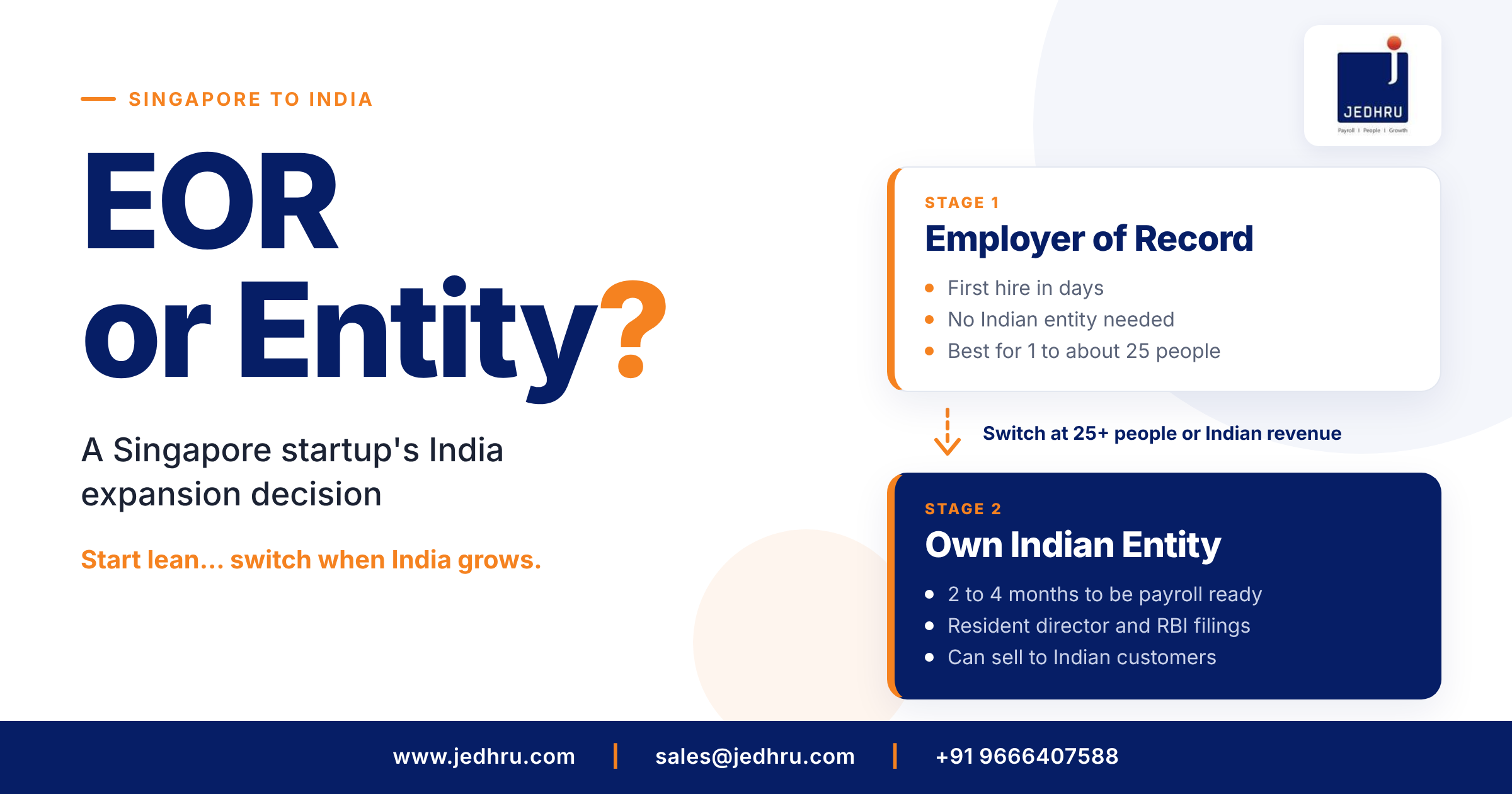
EOR or Entity? A Singapore startup’s India expansion decision. Start with an Employer of Record, then switch to your own Indian company at 25+ people.

EOR or Entity? A Singapore Startup's India Expansion Decision

Most Singapore startups should start in India with an Employer of Record (EOR) and move to their own Indian company later. Use an EOR when you have fewer than about 25 people in India, you are still testing the market, and your Indian team builds or supports a product you sell from Singapore. Set up your own Indian company when India becomes large, permanent and revenue-earning. The usual signals are 25 or more people, an Indian office, Indian customers signing contracts with you, or Indian in

Read
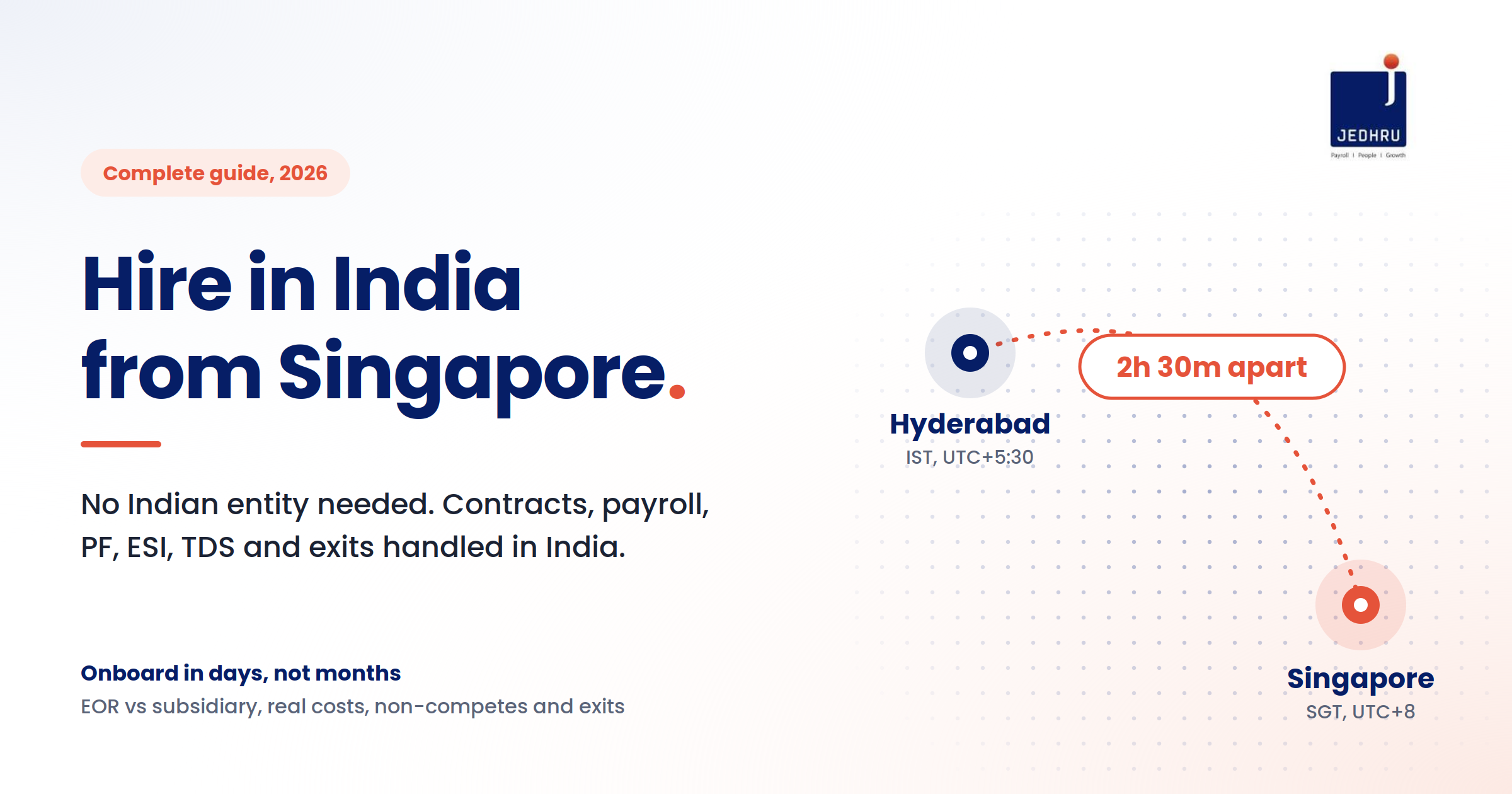
Guide to hiring employees in India from Singapore without an Indian entity, showing Hyderabad and Singapore 2 hours 30 minutes apart, by Jedhru.

How to Hire Employees in India from Singapore: The Complete 2026 Guide

A Singapore company can hire full-time employees in India in three ways. It can use an Employer of Record (EOR), set up its own Indian subsidiary, or engage independent contractors. For most Singapore companies hiring their first 1 to 100 people in India, an EOR is the fastest and lowest-risk route. The EOR becomes the legal employer in India. It issues the contract, runs payroll, and files PF, ESI, Professional Tax and TDS. The Singapore company directs the day-to-day work. A first hire can be

Read
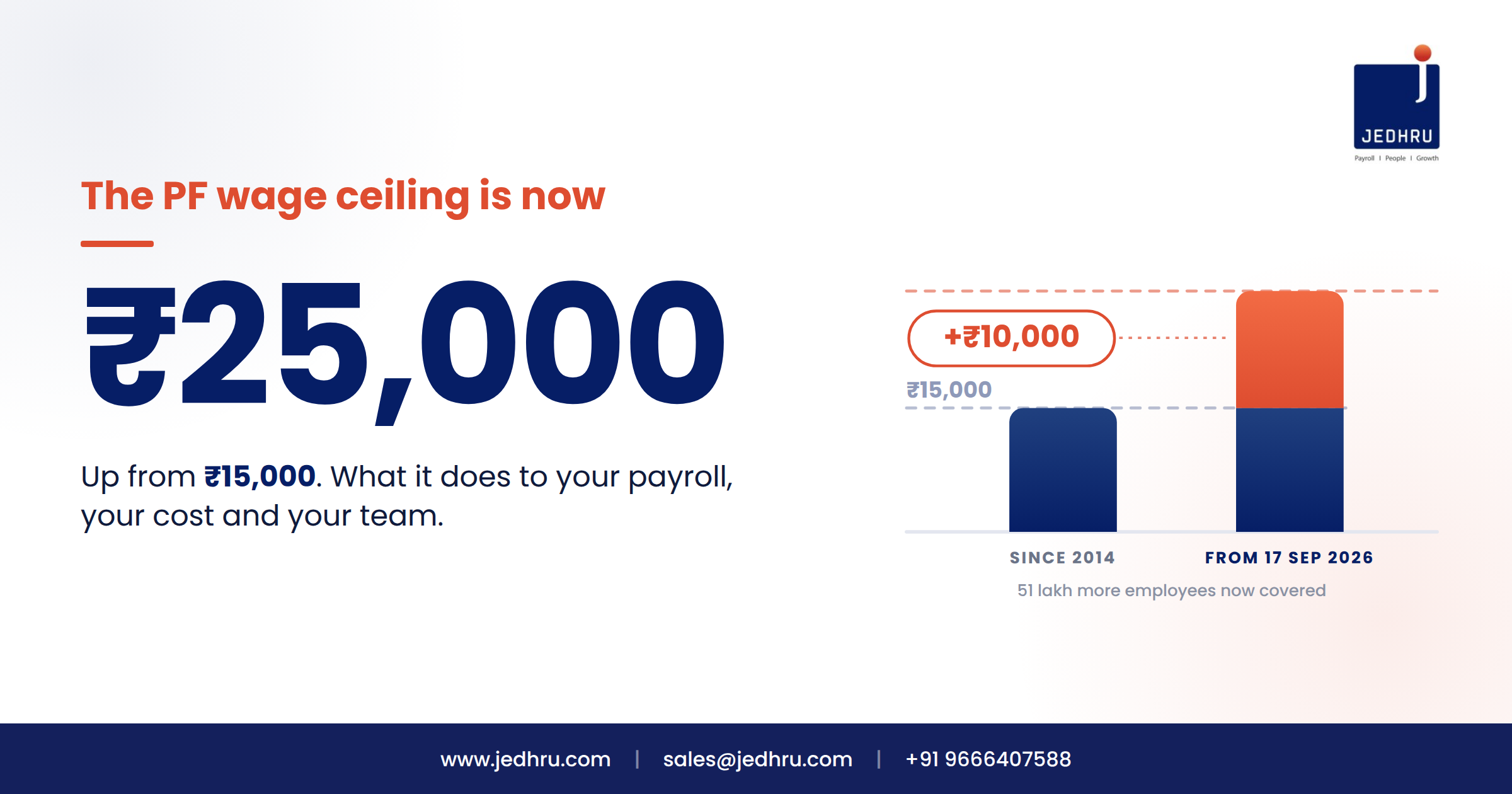
Bar chart showing India's PF wage ceiling rising from ₹15,000 to ₹25,000, an increase of ₹10,000, effective 17 September 2026.

The PF Ceiling Moved to ₹25,000. Here Is Exactly What It Does to Your Payroll.

On 17 September 2026, the wage ceiling for compulsory PF coverage went up from ₹15,000 a month to ₹25,000 a month. The contribution rates did not change. Employees still pay 12 percent. Employers still pay 12 percent. Only the ceiling moved. For an employee at the full new ceiling, the month looks like this. The employee gives up ₹1,200 more from take-home pay. The employer pays ₹1,300 more. About 51 lakh more workers across India come into the system. That is the whole change in five lines. The

Read

Have a question that can't wait?

Our experts answer payroll and compliance questions every day. Skip the reading and just ask.